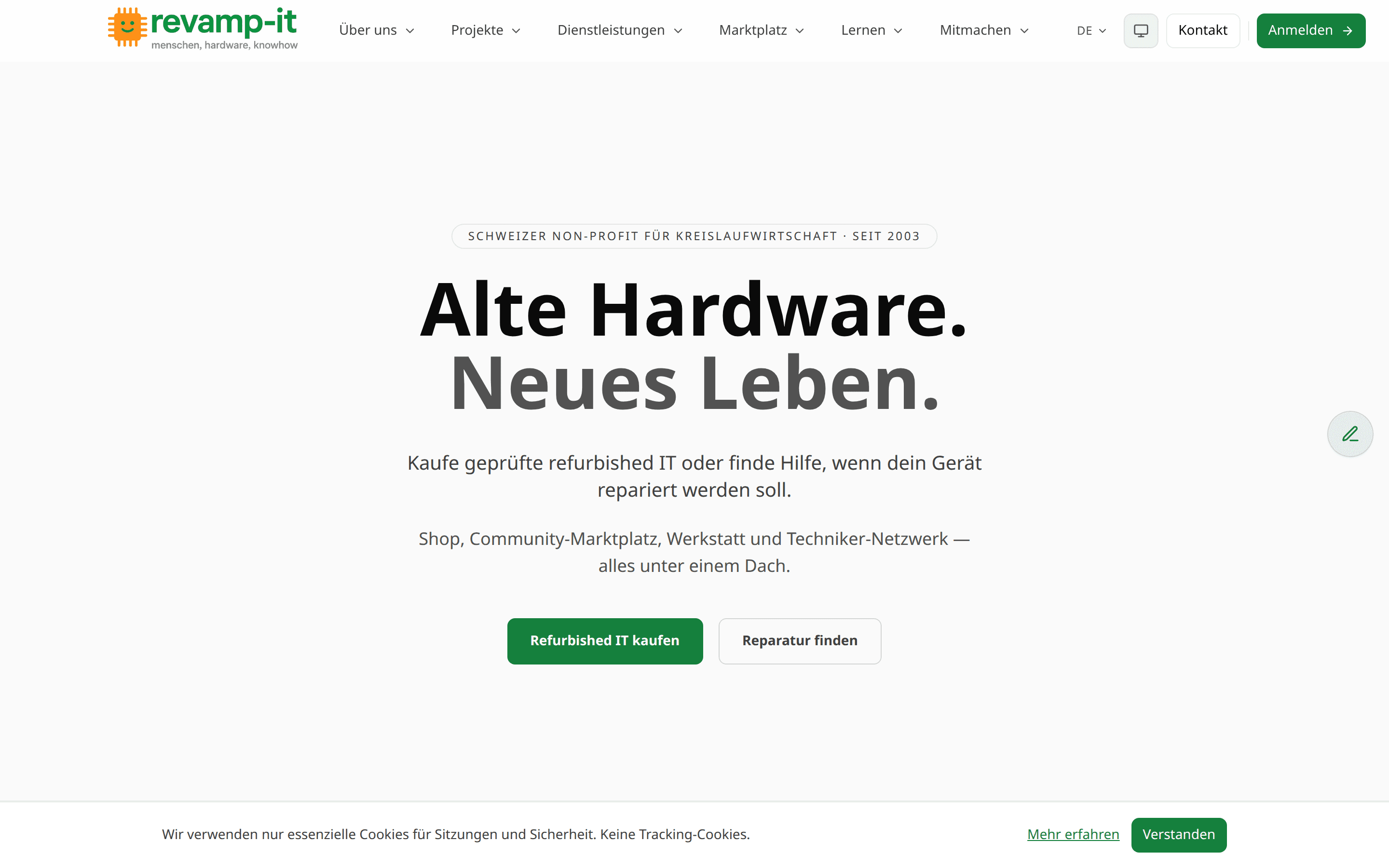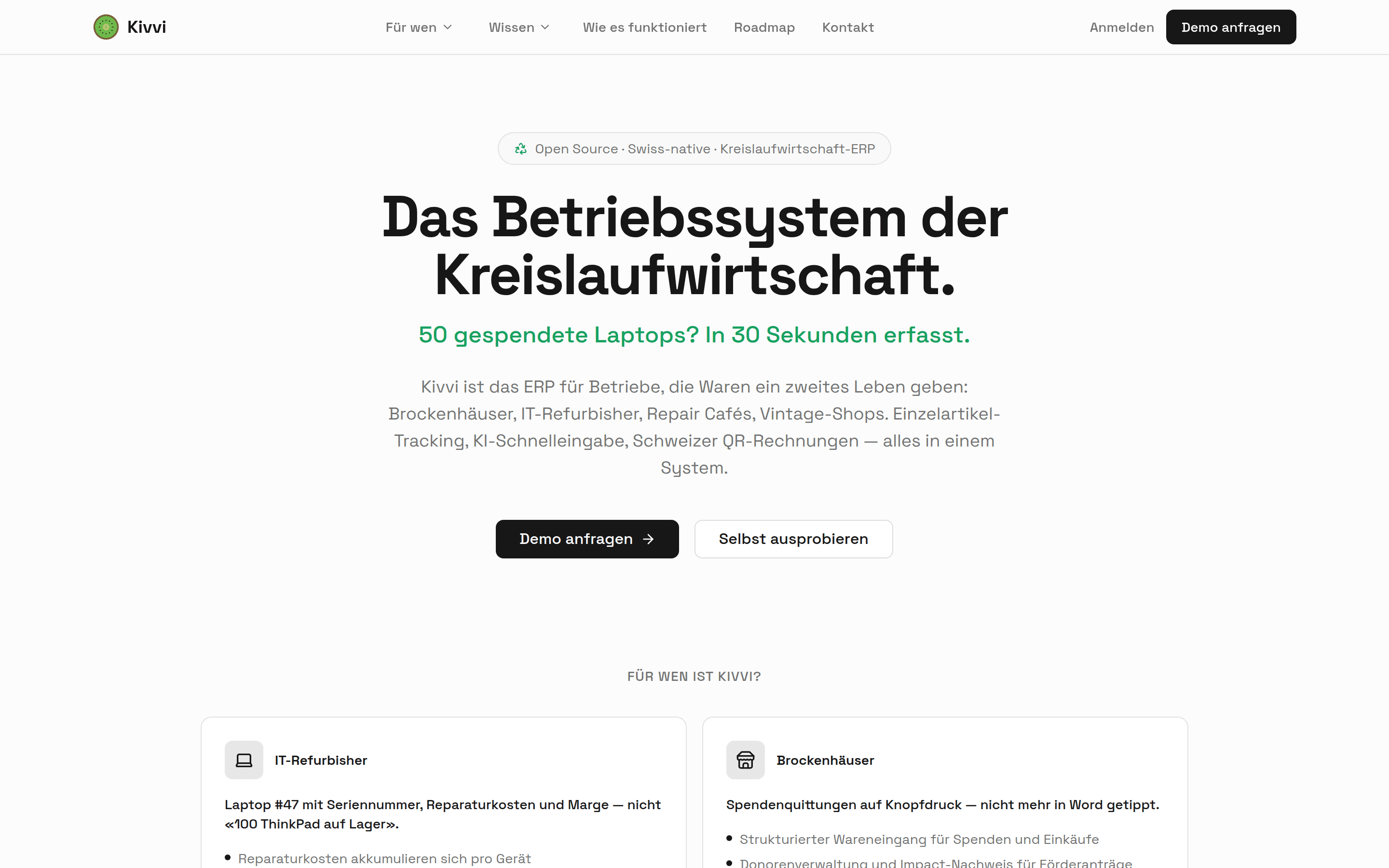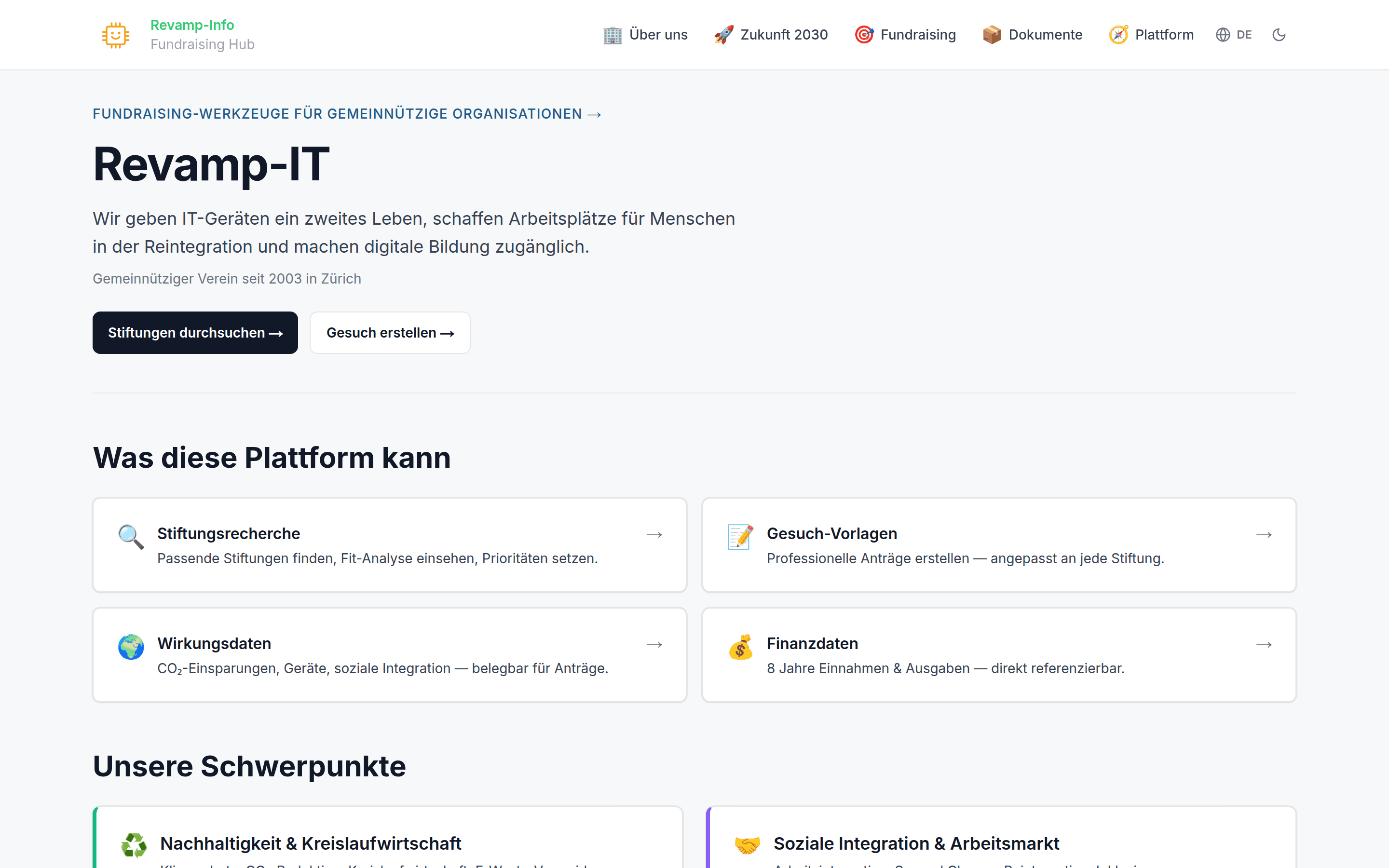
We have reweighted the homepage, the marketplace entry point, and the IT help hub. The trigger was a simple question: what should visitors do first?
The old hierarchy gave no clear answer to that. The most visible call to action was "Donate a device". That is important for RevampIT, but it is not always the most pressing need of the people who come to the website. Many want to buy an affordable, tested device. Others have a broken device and are looking for repair or support. Still others would like to help later, donate devices, or become technicians.
From a business perspective, the shop, marketplace, and repair search have to lead more strongly. They generate direct usage, revenue, trust, and recurring relationships. Hardware donations remain part of the circular economy, but they belong in "Get involved", in campaigns, and in suitable side paths.
From a design perspective, every button must name an outcome. "Discover now" was too vague. "Buy refurbished IT" and "Find repair", by contrast, immediately say what happens. The homepage therefore now leads first to tested devices in the shop and to the search for technicians and workshops.
From an engineering perspective, it was important that this decision does not live merely as a text change. The navigation uses the customer journey configuration as a shared source for the marketplace grouping. The IT help hub now starts with the technician search. The changelog note records the change as a release.
What still remains open: repair shops with assigned people are not yet a data model of their own. Today there are technician profiles with business fields and community/professional tiers. For a truly clean workshop and team structure, we will later need a dedicated organisation profile with members. This larger model change comes after the information architecture.